You've spent years playing somebody else's clubs. See what happens when they're finally built for you.
Master Golf FitterBuilt Around the Way You Play
V213
Luxury Club Fitting Experience
A premium golf fitting destination for seniors, junior, current players, and professionals—bringing together golf clubs, golf club shafts, and golf balls in one complete performance system.
All we need to begin is how far you believe you hit your driver.
Built For Every Player
Seniors to Professionals
Whether you are just starting, still improving, or competing at a high level, this experience is designed to match your equipment to your swing and your goals.
Complete Equipment View
Clubs, Shafts & Balls
This is not just a club selector. It is a complete fitting system that considers club heads, shaft performance, and golf ball behavior together.
Performance Focus
Distance, Flight & Scoring
Every recommendation is shaped to improve trajectory, distance control, proper gapping, and the confidence you carry onto the course.
About This Site
MasterGolfFitter is a refined golf fitting platform built on engineering logic and real golf experience. It helps golfers understand how golf clubs, golf club shafts, and golf balls work together as one system, producing a setup that is balanced, playable, and tailored to the way each player actually performs.
What Makes This Different
Precision-matched golf clubs for dependable distance and control
Optimized golf club shafts for feel, timing, and consistency
Golf ball recommendations for launch, spin, and scoring performance
A complete fitting experience designed for juniors, seniors, amateurs, and professionals
What You Will Receive
A recommended 13-club set built around your game
Club and shaft matching for improved performance
Three golf ball recommendations matched to your play style
Trajectory and distance analysis with clear comparisons
Loft structure and bag gapping guidance
Estimated pricing and print-ready results
A personal carry card for on-course confidence
How It Works
Enter your player information
Select your preferred brand, golf ball, and driver distance
Choose your ball flight, skill level, and playing conditions
Build your set through the premium fitting process
Review your club, shaft, and golf ball recommendations
Print your results, graphics, and carry card
What This Experience Delivers
MasterGolfFitter replaces guesswork with clarity. It shows how your clubs, shafts, and golf balls function together as one complete system, so you can build a set that feels elegant, performs consistently, and supports your ideal ball flight from tee to green.
The Author
David Butler — Engineer, aerospace contributor, racer, and the mind behind the fitting philosophy.
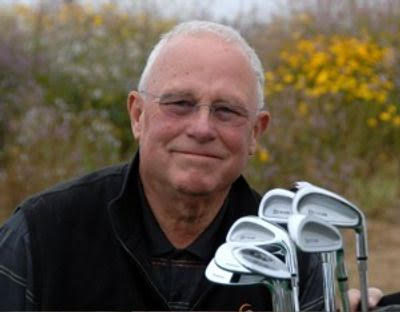
David Butler — “Dr. Grip” — with a set of his Butler Irons
David Butler is a BSME and MBA whose career spans engineering, aerospace, automotive, semiconductor operations, and high-performance competition. That rare combination of technical discipline and competitive insight shapes the philosophy behind this brand.
His background includes serving as Chief Engineer with Chrysler Corporation, contributing problem-solving tools to the Magellan 2 Venus probe mission, spending 25 years in Silicon Valley as an engineering consultant, and serving as VP of Operations at National Semiconductor.
He also flies airplanes, is a national champion in NHRA fuel dragster racing, and loves dogs.
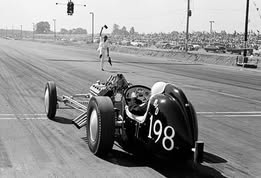
Detroit Dragway · 1959 — at the wheel of his fuel dragster, #198
Career Timeline
Engineering foundation — BSME and MBA
Chrysler Corporation — 15 years as Chief Engineer and Manufacturing Executive, including 8 years of assignments in South America and Europe
NASA / Lockheed Honorary Member — Magellan 2 Venus probe
Silicon Valley — engineering consulting and quality-improvement implementation, 25 years
National Semiconductor — VP of Operations
How The Golf Ball Fitter Was Born
The founder story — from gripping clubs, to building them, to fitting the ball itself.
The idea that eventually became The Golf Ball Fitter started a long time ago — back when I was attending Ohio State University in the 1950s. During that time, I had the opportunity to meet Jack Nicklaus and watch him play at the Scarlet and Gray Course in Columbus, and I also saw him play at Pebble Beach and St Andrews in Scotland. Seeing golf played at that level left a lasting impression on me.
Throughout my professional career, golf remained a passion. I wasn’t a great golfer, but I was always experimenting — re-gripping clubs, replacing shafts, and repairing clubs for myself and for others. It was a hobby that followed me everywhere.
In 2003, my wife Mary told me she wasn’t going to have lunch with me every day — and that I needed to find something to do. So I went to the driving range, started hitting balls, and realized I needed new grips. To my surprise, there was no place in Half Moon Bay to buy grips, so I drove to a golf store in San Mateo, California. There, I saw a sign: “Help Wanted.” I took the job.
That’s where I learned how to properly install grips — and that’s where the name “Dr. Grip” came to be, thanks to the store’s owner, Nancy Lee.
I went back to the driving range and told people I did grips. Orders started coming in. I contacted GolfWorks and spoke with Mark Masters, who made me a serious offer to buy grips in bulk. I took it. Soon I was back at the course doing re-grips, and business grew quickly.
To expand, I rented a small shop in Half Moon Bay, selling grips and doing minor club work. People started stopping just to see what I was doing — even Neil Young came in one day. Eventually I outgrew that space and rented a trailer at the Half Moon Bay driving range.
While working with Mark Masters at GolfWorks, we designed a set of Butler Irons. I ordered several hundred sets, and they were extremely successful. During that time I returned to GolfWorks, took all the fitting and other classes they offered, and officially became a certified club fitter.
My son Bob is the real golfer in the family. I built a set of clubs specifically for him, and we went out to the Half Moon Bay Golf Links Ocean Course to play his first round with them. He shot a 68 — with a hole-in-one. I’ll never forget that day. I even fell into a ditch and Bob had to pull me out. I’ve never been a great golfer myself — Bob used to say, “I don’t really want to watch that swing.”
Later, I moved into a shopping mall location. When I ran out of Butler Irons, I contacted Bill Holowaty at Miura Golf, who made me a dealer. Based on my engineering background, I was so impressed with the design and precision that Miura irons became the only irons I sold.
I also worked closely with Bill Lange at True Temper, and purchased the entire inventory of a lightweight shaft line that was in production at the time. I invested in TrackMan, which took my fitting knowledge to an entirely new level. I learned extensively about fitting, club dynamics, and golf-ball behavior from leaders like Mr. Miura and others in the industry. I was lucky enough to have an up-and-coming, very talented golfer named Tracy Nichols join me. I could do the fittings, Tracy and I could build the clubs, and then Tracy could teach people how to hit them. We made quite a team. I was even mentioned in Golf Digest as one of the top club fitters in the United States.
But one question always bothered me: fitting the clubs is great — but what golf ball should the player use? The only real answer at the time was trial and error. During fittings, I would bring out a wide selection of golf balls and have players hit them while TrackMan collected data. It may have worked — but it wasn’t scientific enough. That question stayed with me for years.
Eventually I developed an optimizer using highly advanced technology, first built in Excel, using published launch data from players like Tiger Woods and Rory McIlroy. When I ran the numbers, my model produced the same distances, peak heights, and angles of descent as the published data. The problem was simple: you can’t put an Excel worksheet on the internet and make it interactive.
So, using artificial intelligence — combined with decades of inputs, fitting experience, and engineering knowledge — we built the optimizer for real. Today it can predict the optimal golf ball based on temperature, altitude, ball launch speed, and ball launch angle. Players can now carry a yardage card in their pocket that shows exact distances for every club and every ball in their bag.
That’s how I went from gripping clubs, to designing clubs, to manufacturing clubs, to club fitting, to golf-ball fitting. And that’s how The Golf Ball Fitter was born.
Miura Golf — Featured Dealer
Precision craftsmanship meets engineering-driven club fitting.
Japanese golf club manufacturer Miura Golf, known for making premium forged irons, named Professional Master Clubfitter David Butler its first Featured Dealer.
Butler, also known as “Doctor Grip,” was featured on the Miura Golf website with photographs of his custom fitting and clubmaking facilities in the San Francisco Bay Area. Miura described this recognition as a way to honor dealers who do an exceptional job representing the product and helping golfers understand the value of custom fitting.
Miura representatives emphasized that Butler not only personified the kind of clubfitter the company wanted associated with its brand, but also showed an unusual level of commitment by focusing entirely on Miura products instead of mixing in off-the-shelf retail offerings.
Butler’s fitting sessions typically lasted between two and five hours. During those sessions, golfers learned how shafts bend, twist, droop, and kick through the swing. For precise fitting, Butler used technologies such as TrackMan and True Temper’s computerized Shaft Lab to analyze swing behavior and build clubs with tight tolerances in shaft selection, length, swing weight, kick point, loft, lie angle, and grip.
Miura highlighted Butler’s engineering background, his history of technical leadership, and his passion for golf as key reasons he was able to create such a disciplined fitting process. The company viewed that combination of engineering, craftsmanship, and commitment to feel as a natural match for the Miura philosophy.
ABC News — Custom Club Fitting
A deeper look at the science and patience behind true custom fitting.
Wayne Freeman’s ABC News piece described a custom fitting experience that was very different from buying golf clubs off a rack or out of a box. Instead of relying on stock assumptions, the fitting process centered on detailed launch monitor analysis and patient observation of ball flight.
Freeman explained that David Butler used a TrackMan launch monitor to study many elements of the golf swing, including shaft and club angles, swing speed, ball speed, spin, descent, and other factors that affect how the ball actually travels. The process took hours, not minutes.
The article went on to describe how Butler built a set of Miura irons that felt balanced and efficient while producing highly impressive TrackMan numbers. Freeman noted especially strong smash factor readings, improved consistency, straighter shots, and additional distance compared with previous sets built using other clubheads.
He also described the trajectory of the irons as ideal: high enough to hold greens, stable enough in windy conditions, and controlled enough to avoid ballooning. Even the longer irons performed with surprising ease and reliability.
The overall point of the story was that true custom fitting is not marketing language. It is a disciplined process of measuring performance, understanding ball flight, and selecting equipment that works with the golfer rather than against the golfer.
Making Error-Free Arrows
Miura club fitter David Butler — a feature by Jay Stuller.
An appointment with custom club fitter David Butler begins unlike any other in the world, and that’s a declarative statement without a gram of hyperbole.
After all, Butler is the only fitter with a studio in Princeton by the Sea’s Harbor Mall, a mere long iron from California’s northern coast. His fittings start with a ride in a smartly restored cobalt blue 1956 Ford pickup, which sports a digitized dashboard, satellite radio and growling Hemi under the hood. At the 3-Zero Café hard by the Half Moon Bay airport, the soft-spoken 73-year-old with rimless glasses and white hair will gently pick your brain about golf, work and life in general; assess your personality to see if you’re a compatible subject; and buy you breakfast.
Eat the entire plate of corn beef hash and eggs, because every calorie will be burned hitting golf balls over the next three hours.
With keen observations and data collected from eight separate computers, the man known as Dr. Grip can then begin to create a set of exquisite Miura irons, the heads of which are forged in Japan’s Himeji City, where master craftsmen once made legendary samurai swords. Each shaft, what Butler calls “the engine of the golf club,” must have the precise length, weight and stiffness for your individual swing, and a flex, kick-point and spine alignment that transfers maximum energy to the club-head. In turn, the shaft and club-head will produce the highest possible “smash factor,” which adds to ball speed and distance, while also producing a launch angle and spin rate that sends shots on a high trajectory, so that balls drop and stop on greens.
These are only a few of the 20 or so factors that go into the custom clubs, says Butler, a former chief engineer at Chrysler in Detroit, who also ran operations at automobile plants in the United Kingdom and Colombia. “What we’re trying to accomplish with the shaft and the head is a three-axis alignment,” he explains, “which is foundational for launching missiles and golf balls alike.” Along with his engineering bent and use of technology, Butler is also a disciple of total quality improvement, and applies a systematic discipline to the club-fitting process.
Indeed, an assembled set is but a first draft. Clients are asked to hit each new club as he takes in a second set of results from a TrackMan launch monitor and a strike board, enabling Butler to make final adjustments to lie angles and lofts, and ensure that the carry between each club is roughly equal. When satisfied that the clubs are pure, only then does Butler allow them out of the studio and onto a course.
“To see people smile when they hit these clubs means everything,” he adds. “It’s my hobby and my passion.” And it certainly translates to satisfied clients, including executives, professional players and even golfers who work for other club-fitting companies. Says Wayne Freedman, a San Francisco television reporter and Marin County golfer now on his second set of Butler-crafted irons: “Hitting a club made by David is like your first taste of chocolate.”
The Not List
With off-the-shelf clubs you get what you pay for. Many sets feature shafts with mismatched flexes and frequencies, attached to heads manufactured with relatively loose quality tolerances. According to a study sponsored by Golf magazine, 70 percent of core and avid golfers who bought clubs in the past year did not get custom fit. About 20 percent got a cursory fitting with loft and lie angles, and only about ten percent were tested on a launch monitor — three quarters of whom reported playing much better than before.
A session with a master like David Butler will likely cost $250 to $300, and a set of custom-assembled Miura irons with Butler’s private inventory of premium True Temper will cost three to four times more than premium branded clubs. That notwithstanding, a complete and thorough fitting was a much different experience than anything else in golf.
The Magic of Materials
A Midwestern native, David Butler attended The Ohio State University and played football for fabled Coach Woody Hayes. He found his operational and supply-chain work at Chrysler fascinating, and in an eclectic career has also worked on a nuclear reactor, flew airplanes, and crewed a AA Fuel National Drag Racing Champion — all of which explains his interest in engines. “I’ve been making and fixing clubs for more than 50 years,” he explains. “It started with my friends.”
Today he works exclusively with the heads designed and forged by Japan’s Katsuhiro Miura and his sons. Often referred to as having “the hands of God,” Miura makes irons softer than most. “Miura takes out the top layer with the impurities, and uses only the best low-carbon premium steel,” says Butler. Because his dedication to quality is so closely aligned with Miura’s, the Japanese firm named him their first Featured Dealer in the U.S., and Mr. Miura personally presented him with a set of irons engraved with Butler’s signature on each club.
A Fitting Lesson
On the TrackMan studio, Butler compared ball speed, face angle, vertical launch angle, smash factor and more across different shafts, weights and flexes, then across five different Miura heads. The data showed an average smash factor of 1.4, close to the hypothetical best of 1.5. Smash factor is actually more important than club-head speed at impact: one extra mph of club-head speed gives about a yard, but one extra mph of ball speed yields three yards down the fairway.
Butler’s conclusion: clubs with True Temper ultra-light M-80 shafts about a half-inch longer than standard, but still stiff, with a mid-sized grip. If the clubs performed in the real world as they did on the TrackMan, the result would be about 20 to 25 more yards of carry and roll from a well-fitted six iron. A good fitting, then, is also something of a major golf lesson — and when pure shots start heading long, high and straight, Dr. Grip’s passion is once again refueled.
The David Butler Golf Network
One family of specialist golf sites — fitting, science, and the stories behind the game. Fifty years of fitting, now powered by AI.